
Call for Submissions: Intercambio 25 “Pedagogies of War”
We find ourselves in an international context where for some years now, the phenomenon of war has been spreading geographically through various manifestations: the war between Russia and Ukraine (with the latter supported by NATO forces), the war between the United States and Israel against Iran, the violence in Sudan and Mali, and the revival of the US government’s revival of the Monroe Doctrine, signal a new phase in inter-imperialist clashes over global hegemony, in which the United States is increasingly open to military actions and to new patterns of their use, such as the extrajudicial destruction of boats in the Caribbean, the military intervention and kidnapping of the Venezuelan president Nicolas Maduro and Congresswoman Cilia Flores, threats against Cuba and, of course, the ongoing genocide in Gaza, which condemns the Palestinian people to suffering, death, and a struggle for survival.
The current context of war is manifest in processes that reflect the global struggle for hegemony between the United States and China. Against the backdrop of a multi-crisis—marked by socio-environmental problems, the erosion of labour rights, the intensification of neoliberal austerity, and so on—we are witnessing the rise of reactionary political movements and coalitions of far-right forces. Some are openly fascist organizations, as well as new nationalist and religious movements that give rise to new forms of resistance and struggle.
Furthermore, new geopolitical conditions have emerged on a global scale, in which the struggle for hegemony is intertwined with class domination within each country. War isa symptom—perhaps the most obvious and stark one—of a complex web of deep-seated tensions and structural processes.
In the wake of the massacres in Gaza, working-class organizations and pro-democracy movements must rethink education and its role in society.
Education is an area in which the war has had a major impact —both formal education in schools and informal education, which takes place in community learning spaces, as well as what might be called social education. That is, the set of processes and mechanisms of subjectivation that unfold within societies. This can be explained, at least in part, by the fact that throughout history, educational spaces have been areas of great interest both to imperialism and political projects seeking to contain and/or reverse social transformations linked to social justice and projects of radical change.
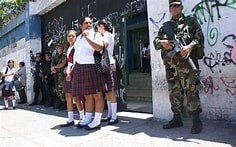
Currently, the education sector is under siege from political campaigns and initiatives with warlike dimensions. In the realm of formal education, notable examples include direct attacks on educational institutions (manifesting as “ scholasticide” in Gaza and the destruction of schools in Lebanon and Iran, where it is most clearly evident), the militarization of schools, the intervention of military actors in educational institutions, and the formulation of militarized education policies.
On the other hand, this campaign against education has also unfolded through a “pedagogy of the enemy” present in bellicose discourse, which has gained significant influence in the public sphere and is also significant in educational spaces outside the school system. Among other things, this consists of denying the right to exist of that which is perceived as a threat and even serves as the starting point for an entire epistemology that shapes the current reactionary worldview organizing the way “the other” is understood as part of a reactionary cultural battle.
The “enemy”—whether external and linked to international conflicts, or domestic, ranging from criminal groups to opposition political factions—becomes the justification for policies that violate rights, but also the cornerstone of an educational approach designed to impart an anti-rights worldview. It follows from this pedagogy of war that, migrants, leftists, and vulnerable populations (including children) are declared “enemies,” whether by a reactionary intellectual close to Argentine President Javier Milei, a Zionist politician in Israel, or the President of the United States himself.
In light of this situation, Intercambio Magazine invites interested individuals to submit articles, essays, and/or reviews that can shed light on the implications of war for educational processes and spaces in different countries, with the aim of compiling an issue that contributes relevant insights to the current discussion on the effects of war on education, and on processes of resistance emerging from various educational sectors.
We invite submissions of articles on the following topics:
• The direct impact of war on educational spaces.
• Militarized policies and/or projects, or those openly influenced by militaristic logic, in public schools.
• Educational discourse and/or practices that draw on the “pedagogy of the enemy” (xenophobic, racist, reactionary).
• Links between the use of AI by big tech in armed conflicts, the restructuring of educational corporations, and educational systems and platforms
• Experiences and proposals for resistance to war from schools or educational spaces.
Deadlines for the call for submissions:
• June 20, 2026: Deadline for submitting article proposals (title and abstract of 150 to 200 words).
• July 31, 2026: Deadline for submission of articles based on approved proposals and other materials.
• September 2026: Publication of issue 25 of Intercambio.
Editorial Guidelines
• Articles should be between 1,000 and 2,500 words (6,000 to 15,000 characters). If they are testimonies, a maximum of 800 to 1,000 words (maximum 6,000 characters).
• They should follow this format: Word document, 1.5 line spacing, Times New Roman font, size 12.
• Titles in bold, subtitles in italics.
• References must follow APA format. Include the author(s)’ information as a footnote (institutional affiliation and email address). Also include: an abstract, keywords, and bibliographic references.
• Include a brief biography of the author.
If possible, we ask that you include photos, cartoons, posters, or other images related to the topic with your submissions (please include the photo source and the first and last name of the photographer or artist). Images should be high resolution in JPEG or PNG format.
Please send proposals and articles to the coordinators of this issue: Edgar Isch López (edgarisch@yahoo.com) and Mauro Jarquín Ramírez (jarquinmauro@gmail.com), with a copy to the editor, María Ramos (somary107@yahoo.com.mx).
Sincerely,
Editorial Committee, Intercambio Magazine
María Trejos (Costa Rica), Andrée Gacoin (Canada), María de la Luz Arriaga (Mexico), Miguel Duhalde (Argentina), Edgar Isch L. (Ecuador), Sara Unda (Mexico), Mauro Jarquín (Mexico), Steve Stewart (Canada), Roberto Leher (Brazil), John Avila (Colombia).
Convocatoria-Intercambio-25-ENGDownload
The current context of war is manifest in processes that reflect the global struggle for hegemony between the United States and China. Against the backdrop of a multi-crisis—marked by socio-environmental problems, the erosion of labour rights, the intensification of neoliberal austerity, and so on—we are witnessing the rise of reactionary political movements and coalitions of far-right forces. Some are openly fascist organizations, as well as new nationalist and religious movements that give rise to new forms of resistance and struggle.
Furthermore, new geopolitical conditions have emerged on a global scale, in which the struggle for hegemony is intertwined with class domination within each country. War isa symptom—perhaps the most obvious and stark one—of a complex web of deep-seated tensions and structural processes.
In the wake of the massacres in Gaza, working-class organizations and pro-democracy movements must rethink education and its role in society.
Education is an area in which the war has had a major impact —both formal education in schools and informal education, which takes place in community learning spaces, as well as what might be called social education. That is, the set of processes and mechanisms of subjectivation that unfold within societies. This can be explained, at least in part, by the fact that throughout history, educational spaces have been areas of great interest both to imperialism and political projects seeking to contain and/or reverse social transformations linked to social justice and projects of radical change.
Currently, the education sector is under siege from political campaigns and initiatives with warlike dimensions. In the realm of formal education, notable examples include direct attacks on educational institutions (manifesting as “ scholasticide” in Gaza and the destruction of schools in Lebanon and Iran, where it is most clearly evident), the militarization of schools, the intervention of military actors in educational institutions, and the formulation of militarized education policies.
On the other hand, this campaign against education has also unfolded through a “pedagogy of the enemy” present in bellicose discourse, which has gained significant influence in the public sphere and is also significant in educational spaces outside the school system. Among other things, this consists of denying the right to exist of that which is perceived as a threat and even serves as the starting point for an entire epistemology that shapes the current reactionary worldview organizing the way “the other” is understood as part of a reactionary cultural battle.
The “enemy”—whether external and linked to international conflicts, or domestic, ranging from criminal groups to opposition political factions—becomes the justification for policies that violate rights, but also the cornerstone of an educational approach designed to impart an anti-rights worldview. It follows from this pedagogy of war that, migrants, leftists, and vulnerable populations (including children) are declared “enemies,” whether by a reactionary intellectual close to Argentine President Javier Milei, a Zionist politician in Israel, or the President of the United States himself.
In light of this situation, Intercambio Magazine invites interested individuals to submit articles, essays, and/or reviews that can shed light on the implications of war for educational processes and spaces in different countries, with the aim of compiling an issue that contributes relevant insights to the current discussion on the effects of war on education, and on processes of resistance emerging from various educational sectors.
We invite submissions of articles on the following topics:
• The direct impact of war on educational spaces.
• Militarized policies and/or projects, or those openly influenced by militaristic logic, in public schools.
• Educational discourse and/or practices that draw on the “pedagogy of the enemy” (xenophobic, racist, reactionary).
• Links between the use of AI by big tech in armed conflicts, the restructuring of educational corporations, and educational systems and platforms
• Experiences and proposals for resistance to war from schools or educational spaces.
Deadlines for the call for submissions:
• June 20, 2026: Deadline for submitting article proposals (title and abstract of 150 to 200 words).
• July 31, 2026: Deadline for submission of articles based on approved proposals and other materials.
• September 2026: Publication of issue 25 of Intercambio.
Editorial Guidelines
• Articles should be between 1,000 and 2,500 words (6,000 to 15,000 characters). If they are testimonies, a maximum of 800 to 1,000 words (maximum 6,000 characters).
• They should follow this format: Word document, 1.5 line spacing, Times New Roman font, size 12.
• Titles in bold, subtitles in italics.
• References must follow APA format. Include the author(s)’ information as a footnote (institutional affiliation and email address). Also include: an abstract, keywords, and bibliographic references.
• Include a brief biography of the author.
If possible, we ask that you include photos, cartoons, posters, or other images related to the topic with your submissions (please include the photo source and the first and last name of the photographer or artist). Images should be high resolution in JPEG or PNG format.
Please send proposals and articles to the coordinators of this issue: Edgar Isch López (edgarisch@yahoo.com) and Mauro Jarquín Ramírez (jarquinmauro@gmail.com), with a copy to the editor, María Ramos (somary107@yahoo.com.mx).
Sincerely,
Editorial Committee, Intercambio Magazine
María Trejos (Costa Rica), Andrée Gacoin (Canada), María de la Luz Arriaga (Mexico), Miguel Duhalde (Argentina), Edgar Isch L. (Ecuador), Sara Unda (Mexico), Mauro Jarquín (Mexico), Steve Stewart (Canada), Roberto Leher (Brazil), John Avila (Colombia).
Convocatoria-Intercambio-25-ENGDownload


