Revista Intercambio
Artículos publicados en la revista Intercambio.
-
Call for Submissions: Intercambio 25 “Pedagogies of War”
-
Reconfiguration of teaching work and the structure of schools
Intercambio #21 examines the restructuring of public schools and teachers’ responsibilities in the Americas since the Covid 19 Pandemic. Download here:
-
Public Education Policies and New Privatization Trends
Intercambio #22 examines new privatization pressures on public education in the Americas. Download here:
-
The Living Word: Revitalization of indigenous languages
Intercambio #23 Examines the work of communities and schools to strengthen the use of indigenous languages.
-
Policies of the New Right in Public Education: Alternatives and Resistances
This issue of Intercambio examines the impact on Public Education of the rise of the New Right in the Americas
-
Intercambio 20
Public Education, Society and Environmental Crisis Year 12, No. 20, may 2023 This issue of Intercambio Magazine explores the public education we need to build an active citizenry with thinking and skills that empower them to address the crises. It outlines obstacles that must be overcome to make these changes in public education, and explores some concrete examples in different parts of the Americas where community and schools come together to defend the earth. The crises of climate change and ecological collapse present dual challenges for public schools throughout the Americas. As institutions working with children and youth from all sectors of society including the most vulnerable, public schools must…
-
Intercambio 19
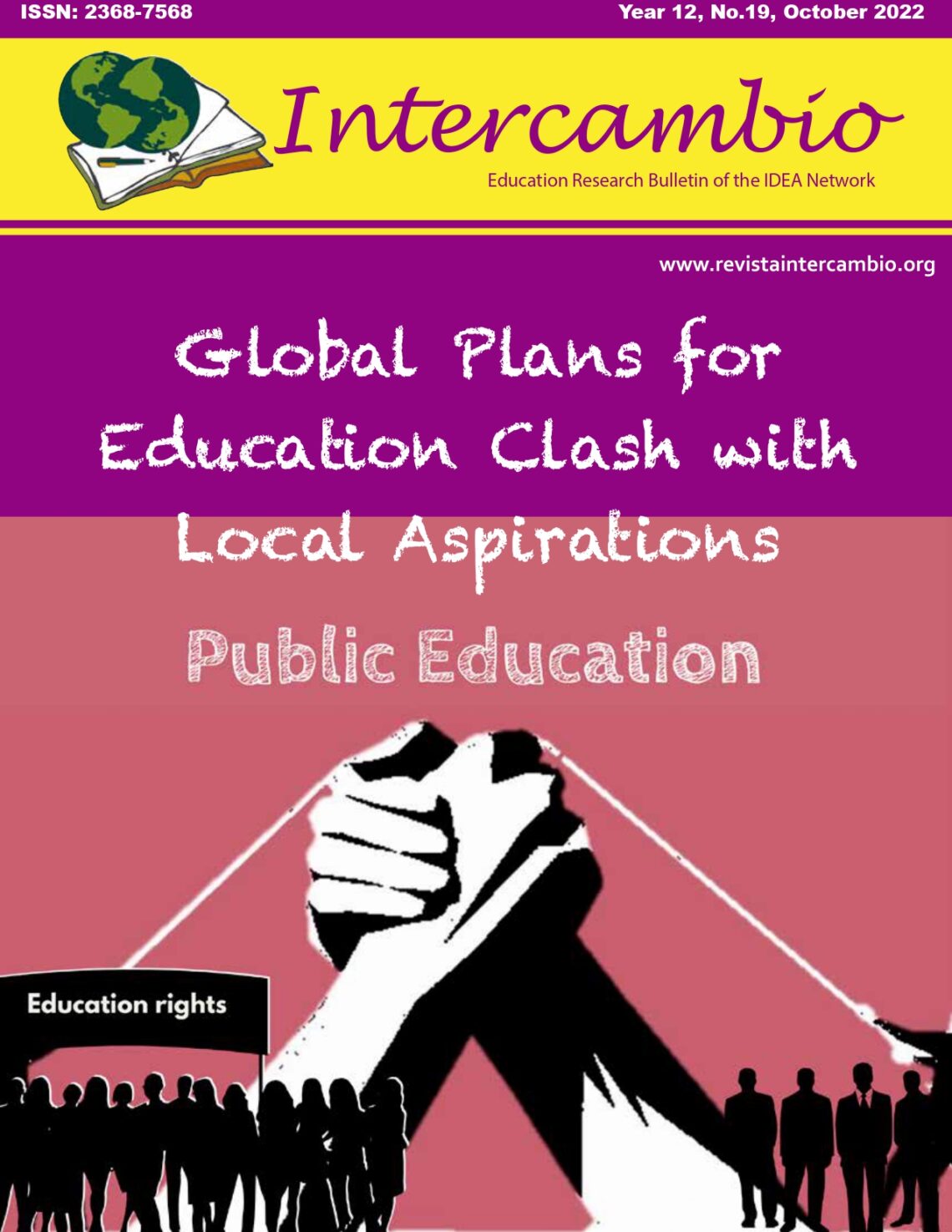
Global Plans for Education Clash with Local Aspirations Year 12, No.19, October 2022 In mid-2019, the Organization for Economic and Co-operative Development (OECD) unveiled its “learning compass.” Described as a “framework that aims to help students navigate towards future well-being,” the Learning Compass outlined the OECD’s goals for global education over the next decade. The compass was unveiled amid colonial tropes of discovery and conquest but couched in perfunctory references to adapting global priorities to the “local context.” It was also introduced on the eve of the COVID pandemic, offering an enticing promise of a charted path to well-being. Indeed, the OECD is now finalizing a “teaching compass,” extending the…
-
Intercambio No.17
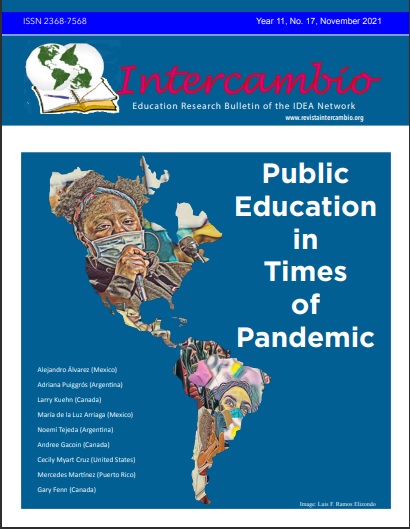
PUBLIC EDUCATION IN TIMES OF PANDEMIC INTRODUCTION In 2020, the Initiative for Democratic Education in the Americas (IDEA Network) hosted a series of webinars called “Public Education in Times of Pandemic” with the objective of analyzing the impact of the crisis on public education. We also wanted to contribute to a discussion on alternatives to the changes that COVID-19 has produced and that have had a serious impact on education. We hoped to make space for reflection on the kind of public education that we will need in a post-pandemic world. The final webinar looked at the big questions like “What will education be like in the new period?” After…
-
Intercambio No. 15
PRIVATIZING TRENDS IN HIGHER EDUCATION: social responses and the construction of alternatives INTRODUCTION We write the introduction to this issue of Intercambio in the midst of the global health emergency due to the COVID-19 pandemic.We are living a historic moment due to the global character of the pandemic, the number of those infected and those who have died. This health catastrophe has exposed the harm caused by the neoliberal policies that have been applied for more than 30 years, leaving wide open the dismantling of the public, the privatization of health systems, the worsening of living conditions and the prevalence of chronic illnesses such as diabetes, obesity and hypertension. The…
-
Intercambio No. 14
PUBLIC EDUCATION: A SOCIAL RIGHT FACES THE OBSESSION WITH TESTING INTRODUCTION We are going through a time in which standardization is intensifying on a global scale. Evaluation as a mechanism of control and a tool of privatization plays a central role in determining public policies and has become one of the fundamental components of educational reforms which, far from improving school conditions, have impoverished the course of public education and the teaching profession. In this context, critical reflection by our organizations becomes more and more necessary, and gives new meaning to resistances seeking alternative forms of assessment that meet the public education needs of our peoples. The contents of this…